Yiddish & historical Hebrew

Old family letters
you can’t read?

We decipher and translate handwritten family documents into clear English, and help you discover the people and stories behind them.

Izzy Posen-Griffoul

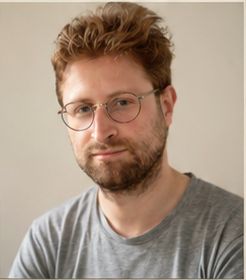
I’m Izzy Posen-Griffoul, a native Yiddish speaker, translator, interpreter and researcher. I work with families, researchers and cultural organisations.

Start with a photograph or scan. Your initial assessment is free.

Also explore Yiddish & consultancy, research and talks.

Every family document begins with something to decipher.
Letters · Postcards · Diaries · Memoirs · Audio & video · Family archives

Translation & family history

From a single letter
to a family’s story.

You may want to know what one document says, understand a collection of family papers, or bring years of research together in a book. We can agree an approach that fits your material and your aims.

Deciphering & translation

Handwritten and printed Yiddish, historical Hebrew and rabbinic texts, transcribed in the original language and/or translated into English, with explanations where the words need context.

Letters, inscriptions, memoirs, archival documents and books.

Family-history research

We investigate the names, places and events in your documents through archives, civil registries and historical newspapers, placing them within the wider history of the family and its community.

Translation, historical context and a written account of the findings.

Family books & archives

We bring documents, photographs and research together into a family history that others can read and keep, with editing, layout and design.

A project shaped around what you want to preserve and share.

Yiddish audio & video

We transcribe spoken Yiddish and translate it into English: family recordings, oral histories, Holocaust testimony and research interviews.

A Yiddish transcript, an English translation, or both, according to your project.

Family histories cross borders and languages. We work with specialist researchers, linguists and designers to decipher documents, connect sources and produce a carefully researched account. Our projects can bring together material in Yiddish, Hebrew, German, Polish, Russian and other languages.

Getting started

Send a sample.
We’ll take it from there.

You do not need to know the language, the handwriting or the history before getting in touch.

Tell us what you have
  1. Share your material

    Use the enquiry form to send a few clear photographs or scans, with anything you already know about the documents.

  2. Agree the work

    We discuss what you would like to learn, the scope of the work, a quote and a timescale.

  3. Understand and share it

    Your translation or research can stand on its own, or become part of a larger family-history project.

A family-history project

Two Families and the Holocaust

From recorded memories to a researched family history.

Two Families and the Holocaust, 2026. 440 pages.

The work involved Transcription and translation, annotation, historical and archival research, genealogies, editing, imagery and book design.

A translation can open up new questions.

In the summer of 2022, a commission to translate two Holocaust survivors’ recorded Yiddish testimonies grew into a wider investigation. Their recollections raised questions about relatives, places and events that translation alone could not answer.

We began adding historical annotations. Then new archival discoveries and testimonies by fellow survivors changed the scope of the project. One breakthrough identified a German man remembered only as “Lang”, who had helped protect the family under Nazi occupation. The surviving records revealed both his actions and the complicated circumstances in which he acted.

Working with the family, we developed Two Families and the Holocaust: a 440-page book of annotated testimonies, historical and biographical research, maps, genealogies and archival documents. It traces two different paths through war, displacement and survival, and reconstructs the communities and family lives behind the accounts.

The research brought together sources in Yiddish, Hebrew, German, Polish and Russian. Survivor testimonies, civil records, Yizkor books and historical newspapers helped us test recollections against the surviving evidence and follow leads across languages.

Read about the discovery in Jewish NewsVisit the project websiteDiscuss your family-history project
A fellow survivor’s handwritten Yiddish testimony. Jewish Historical Institute, Warsaw, AŻIH 301/4333; from the project’s research collection.

From the research

Another voice, another piece of the story.

A fellow survivor’s account describes life in the forests and names the brothers in the highlighted passage. Reading it alongside the family’s own testimony helped us connect memories, compare accounts and place individual experiences in a wider history.

This is the work behind the finished book: deciphering handwriting, tracing references and connecting scattered evidence.

A client’s experience

“These letters have sat around in a box for years and were totally inscrutable to me. So it has been an extraordinary experience to give all those words meaning.”

Ruth, North London

“These letters are personal and intimate and Izzy’s response and translations felt to me careful and respectful. That means a lot.”

Contemporary Yiddish & cultural consultancy

For the people who speak it.
For the stories you want to tell.

Hasidic Yiddish is a living language, with its own registers, references and audiences. We help organisations communicate with its speakers and creative teams bring its worlds to the page, stage and screen.

Translation into Hasidic Yiddish

We translate and adapt material into contemporary Hasidic Yiddish for researchers, government and public bodies, businesses and community organisations.

From research materials and public information to educational writing, we consider who will read the text, the dialect they use and the tone the subject calls for.

Discuss a translation into Yiddish

Cultural & language consultancy

We work with researchers, novelists, playwrights, screenwriters and production teams on Hasidic life, language and culture.

Our work includes script translation and adaptation, dialogue, cultural and historical detail, and pronunciation and dialect coaching for actors.

Discuss your project

Yiddish interpreting

I provide Yiddish–English interpreting, with a specialism in courts and the criminal justice system. I am an accredited interpreter for the British courts, with training in criminal justice interpreting at the International School of Linguistics.

Enquire about interpreting

Research

Yiddish as a living language
and a historical record.

My work brings together native knowledge of Hasidic Yiddish, close reading of historical texts, and original research into the language as it is spoken and written.

Language & community

Contemporary Hasidic Yiddish

As a research associate on UCL’s Contemporary Hasidic Yiddish project, I contribute original research on Yiddish and Hebrew language practices through interviews, analysis and scholarly writing. The project was established to produce the first in-depth description of the grammatical and sociolinguistic features of Hasidic Yiddish worldwide.

Read about the UCL project

Testimony & spoken language

Corpus of Spoken Yiddish in Europe

Through my Yiddish research work at UC Berkeley, I continue to contribute to this digital archive of Yiddish-speaking Holocaust survivors’ testimony, which brings together recordings, transcripts and language resources.

This work connects close attention to spoken language with the preservation and study of historical testimony.

Explore the corpus project

Selected peer-reviewed publication · 2024

Non-Vernacular Language in Action: Ashkenazic Hebrew in 21st-Century Diglossic Hasidic Communities

Co-authored with Sonya Yampolskaya, Eli Benedikt and Lily Kahn, this article examines the continuing use of Ashkenazic Hebrew alongside Yiddish in contemporary Hasidic communities.

The IOS Annual, volume 24, pp. 166–244.

Read the article through UCL Discovery

Research in development

Contemporary Hasidic Yiddish literature

I am developing a doctoral project on “enlightened” Hasidic Yiddish literature: fiction, satire and essays that explore religious doubt, secular knowledge and criticism from within Hasidic culture. The project examines how writers draw on inherited texts and language to question communal life.

I am also working on further research projects and articles for peer-reviewed publication.

Selected presentation · July 2025

Contemporary Chassidic Yiddish: Translating for a Non-Standardised Dialect

The choices involved in translating into a living dialect, presented online at the international workshop on Jewish translation and multilingualism hosted by Humboldt University.

Selected presentation · YiLaS 3, UCL, March 2023

Creating Scientific Resources in Chassidic Yiddish

How can scientific ideas be explained in contemporary Hasidic Yiddish? A presentation on terminology, readers’ expectations and the practical choices involved in developing educational materials.

About the YiLaS conference

Talks

Understanding the culture
behind the language.

I give talks on Hasidic life, language, literature and history, drawing on my upbringing and research. These selected talks offer a starting point; we can shape a lecture or workshop around your audience and interests.

Discuss a talk or workshop

Selected talks

About Izzy

A language I grew up with.
A field I continue to explore.

I grew up in the Hasidic community of Stamford Hill, London, speaking Yiddish as my first language and studying Jewish texts in yeshivas.

I hold an integrated MSci in Physics and Philosophy from the University of Bristol, graduating with first-class honours and distinction. My work as a research associate on UCL’s Contemporary Hasidic Yiddish project brings together native knowledge, field research and academic analysis. I also work on Yiddish research at UC Berkeley.

I trained in interpreting for the criminal justice system at the International School of Linguistics and am an accredited interpreter for the British courts. My professional experience includes translation and interpreting for public bodies, researchers and families.

Today, my work spans translation, family-history research, academic projects and cultural consultancy. I continue to write in and about Hasidic Yiddish, including for Forverts, Chvalyes and Kraimel. Knowing the language also means recognising the references, conventions and turns of phrase that can make a document difficult to understand.

Whether I’m working with a family’s correspondence or a researcher’s recordings, I want to help make the material understandable without losing what makes it distinctive.

Common questions

Before you get in touch.

I’m not sure whether my documents are Yiddish or Hebrew.

Send a clear photograph of a page; we can help identify the language.

Can I enquire about just one letter?

Yes. A single letter, photograph caption or inscription can be the starting point. Larger collections and longer projects are welcome too.

How much will the work cost?

The cost depends on the amount of material, the handwriting, the language and how much research is needed. Send a sample for a free initial assessment and a quote.

Do I need to send the original documents?

You can start with clear scans or photographs. Include the full page, and both sides if there is writing on the reverse.

Can we work together if I’m outside the UK?

Yes. Documents can be shared digitally and the work discussed by email or an arranged call, wherever you are based.

Get in touch

What would you
like to discover?

Tell us about your documents or project and what you would like to find out. Your initial assessment is free.

You can attach up to three sample photographs or documents, up to 10 MB each. For a larger collection, send a few representative pages and describe the rest.

For interpreting, research collaborations, talks or consultancy, a short description of what you need is a good place to start.

How your enquiry is handled

Izzy uses your contact details, message and any files to assess and respond to your enquiry. Tally processes the form, stores uploaded files and sends an email notification to Izzy. Your enquiry is not published on this website. You can use this form to ask about your information or request its deletion.

Spam protection is provided through Google reCAPTCHA. Read Tally’s privacy information and Google’s privacy policy.

If the form does not load, open the enquiry form in a new tab.

Handwritten correspondence

Full view of the handwritten letter shown on the homepage.

Two Families and the Holocaust

Two Families and the Holocaust: the cover and spine of the 440-page edition.

Two Families and the Holocaust, 2026. 440 pages.

View the full cover designThe supplied full cover artwork: back cover, spine and front cover.

A fellow survivor’s Yiddish testimony

Full page from a fellow survivor’s handwritten Yiddish account of survival in the forests.

The highlighted passage mentions the brothers. Jewish Historical Institute, Warsaw, AŻIH 301/4333. From the research collection for Two Families and the Holocaust.